
How-To
Estate Cleanout Checklist for Greeley Homes
Greeley is 60.9% owner-occupied with a median build year of 1985, so an estate here is usually one family's forty years. Five local traps, a three-pass method, and the container that fits.
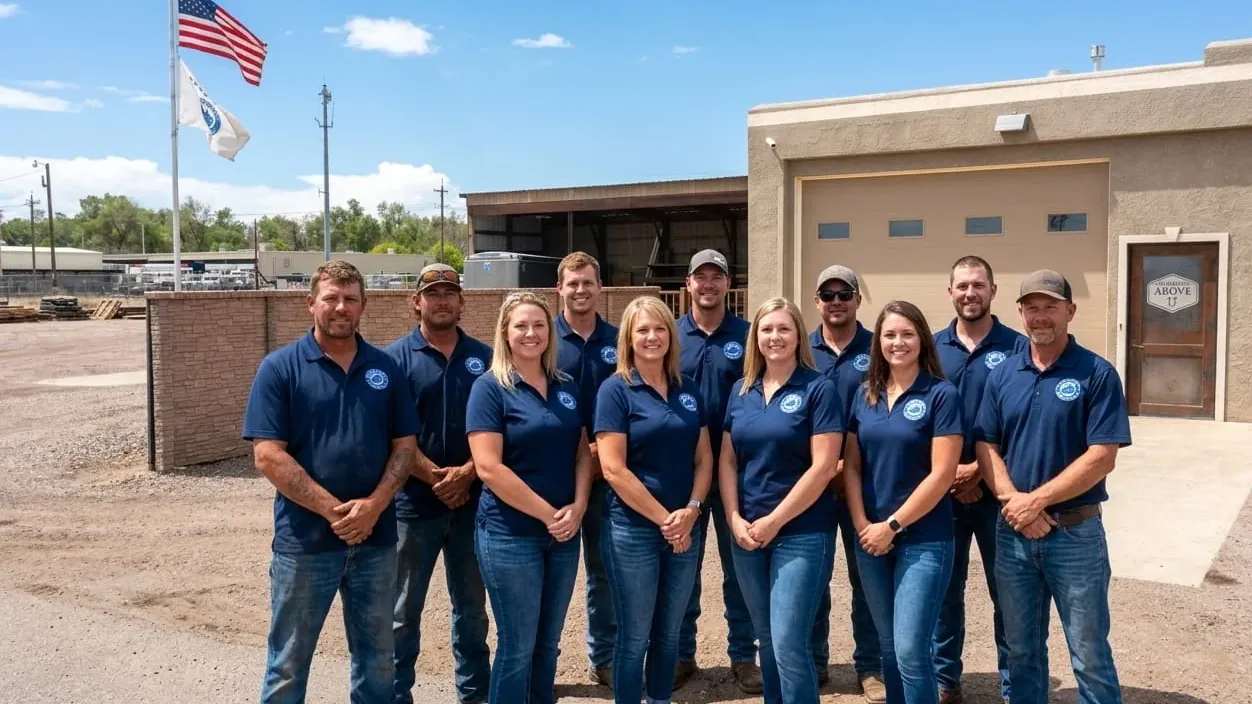
An estate cleanout in Greeley is usually a house somebody owned for a very long time.
That is not sentiment, it is arithmetic. Greeley’s median home was built in 1985, roughly 46 percent of the housing predates 1980, about 17 percent was built before 1960, and 60.9 percent of the city’s homes are owner-occupied. Put those together and the typical estate here is a house with one family’s forty years in it — a full basement, a full garage, a shed, an attic, and a workbench with thirty years of half-used chemicals lined up along the back.
The work is not complicated. It is just large, and it has a handful of local traps that cost people whole weekends. This is a checklist built around those traps.
Before anything leaves the house
Two steps that cannot be undone if they are skipped.
Confirm who has authority to dispose of the contents. In practice that is the personal representative or executor, and until that is settled, nothing should be thrown away, sold or given away — including by well-meaning relatives. We are not lawyers and this is not legal advice; it is simply the order the work has to go in.
Do a documents-and-valuables pass first, before a single bag is filled. The places things are actually found are boring and consistent: taped inside drawers, in coat pockets, inside books, in the freezer, in old handbags, behind picture frames, in film canisters and pill bottles, under drawer liners, in the pockets of luggage, and in the pages of anything with a spine. Deeds, titles, savings certificates, insurance policies, service records and family photographs turn up in exactly those places.
Do that pass twice, with two people, before the container arrives. Once a container is in the driveway the tempo changes, and things move fast in the wrong direction.
The Greeley-specific traps, in the order they bite
Trap 1: the garage full of chemicals
A garage belonging to somebody who kept a house for forty years is a hazardous waste collection. Paint, stain, varnish, thinner, stripper, adhesive, weed killer, insecticide, pool chemicals, motor oil, antifreeze, brake fluid, gasoline in cans, old fertilizer. None of it can go in a container.
And here is the good news, which is genuinely one of the best facts about doing this work in Greeley: Weld County runs a household hazardous waste facility at 1311 North 17th Avenue, in Greeley, and it is free to every Weld County resident. (970) 400-2217. Open Tuesday, Thursday and Saturday, 8 a.m. to 5 p.m.
The published limits are the part to plan around:
- 200 pounds per household per visit
- Nothing in a container over five gallons
- No leaking containers
- No plastic bags
- Electronics and appliances are not accepted
Two hundred pounds sounds generous until you weigh a shelf of paint cans. A forty-year garage is frequently several visits, and the facility is open three days a week. Start the chemical passes in week one, not week four. This is the single most common scheduling mistake in a Greeley estate cleanout.
Being the county seat has practical benefits, and this is the clearest one on the whole site: the county’s facility is here, in the city, three days a week, free.
Trap 2: electronics are banned, and the hazardous waste site will not take them
This is a two-step trap and it catches almost everyone.
Electronic devices have been banned from Colorado landfills since 1 July 2013, under C.R.S. § 25-17-303. So the old televisions, the tower computer, the monitors, the printers and the stereo cannot go in the container.
And they cannot go to the household hazardous waste facility either, which does not accept electronics or appliances. Weld County runs separate e-waste collections; that is the route, and it is worth finding the schedule early rather than discovering the problem with a CRT television in the trunk on a Saturday.
Trap 3: the couch on the lawn is legally refuse
Staging is how cleanouts get done — everything comes out onto the drive or the lawn and gets sorted there. Two Greeley provisions apply.
Greeley Municipal Code § 20-974 defines refuse to include “upholstered furniture… used or stored outdoors in any unroofed area.” An old sofa parked on the lawn for three weeks is not furniture waiting for a decision; in Greeley it is refuse, by definition.
Greeley Municipal Code § 12-269(a) permits trash containers on the public right-of-way for one 24-hour period in seven days — the weekly curbside rule for a household cart. It is not authority to build a pile at the curb and let it sit until somebody deals with it.
The practical answer is straightforward: sort into the box, not onto the lawn, and keep the staging period short.
Trap 4: the City clean-up cannot help an out-of-town executor
People reach for the Greeley Annual Spring Clean-Up first, and for the right load it is genuinely the right answer. It takes appliances, furniture, mattresses, scrap metal and tires, which is a good match for part of an estate.
But read the conditions before you build a plan around it:
- City of Greeley residents only, with “a valid photo ID confirming Greeley residency.” An heir who lives in Denver, or in Evans, or out in Lucerne, is not a Greeley resident.
- No bagged loads. The City states that all materials must be fully visible and that “vehicles with bagged loads will be turned away.” A cleanout leaves a house in bags. That is how cleanouts work.
- No enclosed trailers or box trucks.
- Freon appliances limited to one per household, and a maximum of four tires under 20 inches with rims removed.
- Two days a year, in early May, with a per-load charge.
Dates move from year to year. The Clean-Up line is 970-350-9336, Monday to Friday 7 a.m. to 3 p.m., and the City’s own site is greeleyco.gov. Our full guide to the clean-up covers what it refuses.
Trap 5: the cleanout turns into a renovation
It usually does. The house empties, somebody says the kitchen has to come out before it sells, and now the job is a demolition rather than a clearance.
In Greeley that changes the rules, because of the age of the housing. A pre-1978 house brings the EPA’s lead renovation rule into play for paid work disturbing painted surfaces — and Colorado is not an EPA-authorized state for that program, so firms certify with the EPA directly. A building built before 12 October 1988 is inside CDPHE Regulation 8, Part B for asbestos, which in Colorado is an air quality rule with single-family triggers of 32 square feet, 50 linear feet or a 55-gallon drum and ten working days’ notification — also required for any demolition. The asbestos line is 720-507-5136.
Ten working days is two calendar weeks, and it will reorder the schedule. Read the lead and asbestos guide before the demolition starts, not after.
The three-pass method
The most reliable way through a full house is three passes, in this order.
Pass one — documents and valuables. No bags, no bins, no decisions about furniture. Two people, room by room, checking the boring hiding places listed above. Set aside anything with an account number, a signature or a face on it.
Pass two — the sort. Four destinations and nothing else: keep, sell, donate, dispose. The failure mode is a fifth category called “decide later,” which grows until it fills a room. Local donation and reuse outlets will take a great deal of what is in an average house; they will not take mattresses, broken furniture or anything damp, so do not plan around it.
Pass three — the container. Everything in the dispose pile, loaded properly, in one continuous stretch rather than in dribs over three weeks.
Run the hazardous waste and electronics trips alongside passes one and two, not after pass three. That is the sequencing that saves the week.
Sizing the container
The 20-yard is the default for a whole-house declutter, and it is the right first assumption for most Greeley estates: a three-bedroom house, a full basement, a garage, and the accumulated contents of decades.
- 15-yard — a small house, a condominium, an apartment, or a partial clearance where the family is keeping most of the furniture.
- 20-yard — the default. Whole house, basement, garage.
- 30-yard — a large property with outbuildings, or a genuinely bulky, light load. Bulky and light is the key phrase. The moment dense material enters the picture the calculation changes entirely.
- 10-yard — not for household contents, but the right box if the job includes concrete, masonry or soil from the yard. See heavy debris.
A note on weight, because household loads are deceptive. Books, paper, tile, plaster and anything that has been sitting damp in a basement are heavy out of all proportion to their bulk. A basement full of boxed paperbacks weighs more than a garage full of furniture. Tell us if the basement is the main event.
Loading the box so it works
- Heavy and flat at the bottom, bulky and awkward on top. It is worth twenty minutes of thought and it can be the difference between one container and two.
- Break down what breaks down. Bed frames, shelving, flat-pack furniture, boxes. An unbroken cardboard box is mostly air.
- Load level, below the rails. Anything above the rails cannot lawfully travel, and the load has to be secured. One of the landfills serving this region publishes that all uncovered or unsecured loads will be charged double, and Weld County’s published residential design wind is a 115 mph three-second gust. Two reasons to keep it level and covered.
- Do not put documents with account numbers in an open box. An open container in a driveway is not a secure place for anything with a name and a number on it. Shred separately.
Where the container goes
On the driveway, usually — and in the older half of Greeley that means an older driveway, so we put plywood under the wheels and boards under the rails. Our driveway protection guide covers it.
In the street, the City permits it and names it directly: “Placement of dumpsters within the Public Space and roadways requires Public Space Traffic permits and proper signage.” That is Public Works Permits, 970-350-9881, 2835 W. 10th Street. See the permit guide.
And wherever it goes, it goes five feet clear of any combustible wall. Greeley adopted the 2021 International Fire Code at § 22-454, effective 1 January 2023, with no amendment to Section 304; under Section 304.3 a dumpster must not be stored inside a building or placed within five feet of a combustible wall, and every roll-off is over the threshold in that section. Fire Prevention: (970) 350-9510.
Timing
Estate work rarely runs to a tidy schedule, but two Greeley calendar notes are worth knowing.
Early May is the tightest fortnight of the year here. The average last spring frost is 12 May, so every outdoor job in the city starts at once; the university year ends and a large renter population turns over; and the City’s two-day clean-up lands in the same window. If the cleanout falls then, book the container further ahead than feels necessary.
The household hazardous waste facility runs Tuesday, Thursday and Saturday only. If several visits are needed, that is a real constraint on a two-week schedule.
The short version
- Authority first, then a documents pass, twice, before the container arrives.
- Chemicals to 1311 N 17th Avenue, (970) 400-2217, free, Tue/Thu/Sat, 200 lb a visit. Start early.
- Electronics go nowhere near the box — landfill-banned since 2013, and the hazardous waste site will not take them.
- The City clean-up is residents-only, photo ID, nothing bagged. Plan accordingly.
- The 20 is the default. The 30 only for bulky and light.
- Five feet from the wall, level load, covered.
Call (970) 888-6911, tell us the size of the house and whether the basement and garage are part of it, and we will size it honestly. See estate cleanout, junk removal and the sizing guide. For anything county-related, weld.gov and (970) 400-4000.
Questions this guide did not answer? Call (970) 888-6911. We would rather spend two minutes on the phone than have you order the wrong container.