Roll-off
Roll-Off Dumpster Rental in Greeley, CO
Ten, fifteen, twenty, thirty and forty yard roll-off containers across Greeley and Weld County. Flat rates, plywood under the wheels, five feet off the wall, and one phone number instead of a form.
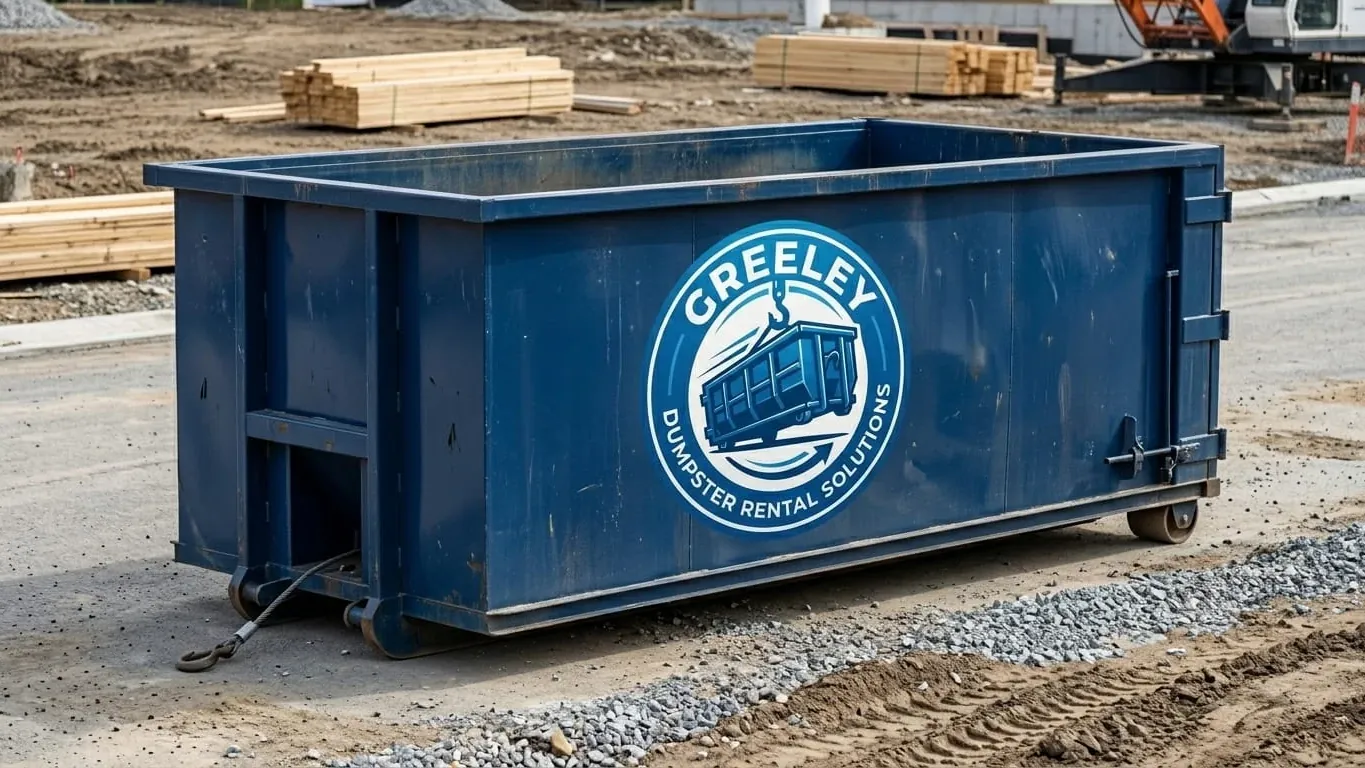
A roll-off is a rectangular steel box that arrives on a truck, sits where you put it while you fill it, and leaves on the same truck. In Greeley the useful part is not the box, it is knowing which rules attach to it — and this is a city where you can actually find out. Greeley is a home rule city and the Weld County seat. It licenses refuse haulers in its own code, it names dumpsters directly in its own permitting guidance, it adopts its own building and fire codes, it runs its own seven-station fire department, and it answers on one number: Greeley 311, (970) 351-5311. That is unusual, and it is good news, because it means questions here have answers rather than shrugs.
Start with the licensing, because it explains how waste works in this city. Greeley Municipal Code § 8-368 requires that “all refuse haulers who collect, transport or remove refuse, garbage or ashes within the city shall be required to have a license.” § 8-369 sets vehicle standards — a packer truck, or a tight metal lining with a flame-proof tarpaulin so nothing spills. § 8-370 requires the description of every vehicle to be filed with the finance director. And § 8-371 declares the City “the sole agency for the collection and disposal of refuse,” acting through “city-licensed operators.” Put together: Greeley does not run the trucks. It licenses the people who do. There is no municipal collection service to fall back on for a project’s worth of material, which is precisely why roll-offs exist here. The code itself lives at library.municode.com.
Then the ground the box stands on, which is the question we are asked most. On private property — a driveway, a yard, a parking lot — no Public Space permit is in play at all. That covers most of what we deliver. In the street it is different, and Greeley is explicit rather than vague: the City’s own permitting document states that “placement of dumpsters within the Public Space and roadways requires Public Space Traffic permits and proper signage,” administered by Public Works Permits on 970-350-9881 at 2835 W. 10th Street. Do not confuse that with § 12-269(a), which allows trash containers on the right-of-way “for one 24-hour period within a seven-day period” — that is the weekly curbside rule for a household cart, not a roll-off pass. Outside the city, ask Weld County at 1150 O Street, (970) 400-4000.
Our service area runs across Weld County and the answers genuinely change as you cross a line. Inside Greeley, the City is the government in every sense that touches a container. In the separate municipalities around us — Evans, Eaton, La Salle, Kersey, Ault, Platteville — each town has its own government and its own rules, and we are not going to tell you that Greeley’s apply there, because we did not establish that they do. Garden City is its own case: a statutory town of 72 acres and about 254 people, incorporated in 1938 and completely surrounded by Greeley and Evans, so one side of a street answers to Greeley and the other does not. We could not find published container rules or a phone number for it, and we would rather say that than guess. And on unincorporated county ground — Lucerne, Galeton, Gill — there is no municipal government at all, county rules apply, and the fire code answer comes from the local fire protection district rather than the county.
The rest is logistics and we keep it simple. Five sizes, flat rates quoted on the phone, plywood under the wheels and the rear rollers as standard, five feet of clearance from any combustible wall, and a tarp when the wind is up. There is no form anywhere on this site and there is not going to be one — describe the job on (970) 888-6911 and you will have a size, a price and a delivery slot before you hang up. If you are not sure which service page you are on, it does not matter; the container is the same and we will point you at the right one.
What A Roll-Off Gets Used For Around Greeley
Household Clear-Outs And Declutters
Basements, garages, storage levels and the long-postponed sort-through. The residential page has the detail, but the short version is that a Greeley house with a lower level in it is a 20 yard job more often than not.
Roof Tear-Offs After Hail
Seven to nine hail days a year in the nation’s most hail-prone corridor makes tear-off the most common single reason a Greeley driveway gets a box on it. Sized on squares and layers, and never a 30 or a 40.
Remodels And Renovations
Kitchens, bathrooms, whole floors and basement finish-outs in a city where the median home dates from 1985. Mixed density, a steady pace, and a container that sits for a couple of weeks rather than a couple of days.
Demolition And Structure Removal
Sheds, garages, decks, interior strip-outs and outbuildings. Dense, heavy and fast, so the answer is usually a smaller box loaded flat, or two of them. See demolition debris.
Concrete, Masonry And Trench Spoil
The weight jobs. A thirty-inch frost line means deep footings and deep service trenches, and spoil is heavy enough that a small container reaches lawful road payload while it still looks empty.
Commercial Build-Outs And Clear-Downs
Tenant finishes, retail resets, warehouse clear-outs and office purges. Bulky and light, which is the one condition where the largest container genuinely earns its place.
Yard, Storm And Brush Clearing
Limb debris after a wind event, hedge and shrub removal, sod, and general lot clearing between the 12 May last frost and the 8 October first frost. Keep clean green waste separate if you can — it has its own routes here.
Rental Turnover And Property Management
With 39.1 percent of Greeley households renting, turns are a regular business rather than an occasional one, and they cluster in May and August with the academic calendar.
Picking A Size Without Guessing
Five sizes, and the choice is usually decided by density rather than by how big the job feels. The 10 yard is the weight box: concrete, block, brick, tile in a mortar bed, sod, rock and trench spoil. The 15 yard is the roofing workhorse and the size for one bounded room. The 20 yard is the Greeley default for a whole-house declutter, and the size for a large or two-layer roof. The 30 yard takes a house being emptied completely, a demolition or a yard full of storm debris. The 40 yard is for bulky, light commercial and construction material — packaging, framing, ceiling grid, insulation. Two rules cover most mistakes: heavy material goes in a small box loaded flat, and roofing never goes in a 30 or a 40. Compare dimensions on the sizes page, or read the sizing guide.
10 Yard Dumpster
Slab, block, brick and footing spoil — it reaches payload with the box still half empty.
View this size →15yd³15 Yard Dumpster
One single-layer hail tear-off, or one room of an older house taken back to the studs.
View this size →20yd³20 Yard Dumpster
The box that leaves our yard most: a basement and a garage cleared in one fortnight.
View this size →30yd³30 Yard Dumpster
A whole-floor remodel, a lifetime of storage, or a May turnover. Shingle never rides in it.
View this size →Access, Surfaces And Which Desk To Call
Every delivery has the same four checks and they are worth knowing before the truck arrives. Surface: plywood goes under the wheels and the rear rollers as standard. Concrete or compacted base is better than lawn or soft graded ground, and after rain or a spring thaw that preference gets stronger rather than weaker. Approach: we want roughly sixty feet of straight run, about eleven feet of working width, and twenty feet of overhead clearance for the hoist — the usual obstacle in Greeley is not the space, it is a service drop or a mature tree limb over the drop point. Alley placement on the older grid is often the best answer and worth asking about. Clearance: Greeley adopted the 2021 International Fire Code at § 22-454 with no amendment to Section 304, so Section 304.3 applies as written — no dumpster stored inside a building, and none within five feet of a combustible wall. Every roll-off is far over the threshold in that section, so the answer never moves: five feet, always. Greeley Fire Prevention, (970) 350-9510. Wind: a chinook will empty an unsecured box across a neighborhood, and one of the landfills serving this region publishes that all uncovered or unsecured loads will be charged double. Tarp it, or put the heavy course on top. If any part of the box will stand on public ground, that is a Public Space traffic permit and signage from Public Works Permits, 970-350-9881. And one line about how the code treats a container that is already in place: § 12-272 makes it a violation for anyone except the owner, occupant, lessee or tenant who placed it to disturb a container or its contents. It is not a rule we enforce, but it is the answer to the most common complaint we hear on a residential street, which is that somebody else filled the box overnight.
Landed on the wrong page? Describe the job down the phone and you will be pointed at the right container, even where that means a different service entirely. Ring (970) 888-6911.
Get one flat number
Two minutes on the phone buys a size, a figure and a slot on the board. Nothing to fill in.
(970) 888-6911Sizes that suit it
How it works
Roll-Off Dumpster Rental in four steps
- 1
Tell us the job
Two minutes, and a cross street and an avenue is enough to place you on this grid. You hang up with a flat number that has the disposal inside it.
- 2
We set it down
The driver walks the approach first, puts mats under both rails, and keeps the box the five feet clear of combustible wall that Section 304.3 asks for.
- 3
Fill it flat and low
Use the days in your window. Heavy on the bottom, nothing standing proud of the rail, and tarped — wind is the risk here, not rain.
- 4
Say the word
Ring or text and we pull it. Metal, cardboard and electronics come out on the way, and the rest goes to a gate permitted to take it.
Roll-Off Dumpster Rental FAQs
Which size should I book?
Density decides it more often than volume does. Anything dense — broken concrete, block, brick, tile with a mortar bed, sod, rock, trench spoil — goes in a 10 or a 15 loaded flat, because it reaches lawful road weight long before it reaches the rail. A bounded job with an edge on it, or an ordinary single-layer roof, is a 15. A whole-house declutter in a Greeley house with a lower level is a 20, and that is the size we deliver most. A house being emptied completely, a demolition or a yard full of storm debris is a 30. Bulky, light commercial and construction material is a 40. Two firm rules: heavy goes small, and roofing never goes in a 30 or a 40. Describe the job on (970) 888-6911 and we will size it in a sentence.
Do I need a permit?
Almost certainly not, because almost every container we set stands on private property, and on private property — a driveway, a yard, a parking lot — there is no Public Space permit in play at all. It changes when part of the box has to stand on public ground. Greeley names dumpsters directly there: the City’s own permitting guidance says “placement of dumpsters within the Public Space and roadways requires Public Space Traffic permits and proper signage.” The desk is Public Works Permits, 970-350-9881, 2835 W. 10th Street, Monday to Friday 7 a.m. to 4 p.m. Do not rely on § 12-269(a), which allows containers on the right-of-way for one 24-hour period in seven days — that is the weekly curbside rule for a household cart. Outside the city limits, Weld County, 1150 O Street, (970) 400-4000. Our permit guide has both.
How far do you deliver?
Across Greeley and out through Weld County. The practical thing to know is that the rules change as you go, and we will tell you which set applies rather than pretend they are the same. Inside the Greeley city limits, the City licenses the haulers, permits the street and enforces its own fire code through its own department. In the separate towns around us each municipality has its own government, and we did not establish their container rules — so we give you the town’s number and say to ask there. On unincorporated county ground there is no municipal government at all, county rules apply from 1150 O Street, (970) 400-4000, and because the county adopts no fire code of its own, the fire answer comes from the local fire protection district. See the service areas page for the full list.
What can I put in it?
Almost everything a building or a household produces: furniture, carpet, drywall, cabinetry, lumber, roofing, siding, fencing, appliances without refrigerant, mattresses, packaging and general yard debris. The exclusions are short and mostly statutory. Electronics are banned from Colorado landfills — C.R.S. § 25-17-303, since 1 July 2013. Tires are refused locally. Liquids, paint, solvents, fuel, oil, pesticides, pool chemicals, pressurized tanks, batteries, hot ashes and anything containing asbestos stay out. The useful local answer for the chemicals is free: Weld County Household Hazardous Waste, 1311 North 17th Avenue in Greeley, (970) 400-2217, Tuesday, Thursday and Saturday 8 a.m. to 5 p.m., open to every Weld County resident, 200 pounds per household per visit, nothing over five gallons, no leaking containers, no plastic bags — and no electronics or appliances. Our Colorado disposal guide goes stream by stream.
How do I book, and is there a form?
There is no form. There is no form anywhere on this site, and that is deliberate rather than an oversight — sizing a container properly takes two minutes of conversation and produces a better answer than a drop-down ever will. Call (970) 888-6911, describe the job in plain language, and you will get a size, a flat price and a delivery slot in the same call. It helps to have three things ready: the address, roughly what the material is, and where you would like the box to sit. If you are not sure the driveway will take it, say so and we will talk through the approach or look at photographs before delivery day rather than after.
More services
Other things we haul
Residential Dumpster Rental
Basements, garages and thirty years of storage out of a house that predates 1980.
Learn more →Commercial Dumpster Rental
Shops, restaurants and contractors inside the limits, where the City is the permit desk.
Learn more →Construction Dumpster Rental
Mixed C&D in one box, swapped next day anywhere the county seat reaches.
Learn more →Roofing Dumpster Rental
Counted in squares and layers, because hail is the job this county buys containers for.
Learn more →Same-Day Dumpster Rental
Ring before nine and there is usually an afternoon slot still on the board.
Learn more →Junk Removal Dumpsters
Empty a lower level, a garage or a rental unit at whatever pace suits you.
Learn more →Estate Cleanout Dumpsters
Unhurried container work for a family emptying a house somebody lived in for decades.
Learn more →Demolition Debris Removal
Porches, sheds, garages and interior strip-outs, with swaps that keep a crew moving.
Learn more →Concrete & Heavy Debris
Dedicated cans for slab, block, brick and footing spoil, loaded flat and low.
Learn more →Yard Waste & Brush Removal
Green material kept in its own load, because composting here is closer and cheaper.
Learn more →Where we deliver
Roll-Off Dumpster Rental across Weld County and Northern Colorado
Same work, same flat rate, every district and town on this list. Open yours for the placement notes and the jurisdiction answer.
Talk to a real person
Need roll-off dumpster rental in Greeley?
Describe the load — the room, the roof, the basement, the slab out the back — and you will get the size, the flat number and the day, on the phone, first time of asking. There is nothing on this site to fill in and nothing sitting in an inbox overnight.
Greeley and every one of the seventeen places we run to in Weld County · Mon–Fri 6:30am–5pm, Sat 7am–1pm